As you may already know, IB Polska is currently participating in a European Solidarity Corps project, hosting volunteers from across Europe who have come to take an active role in the local community.
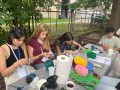
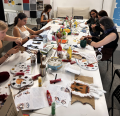
As part of the program of activities, on Tuesday, 21 July, the volunteers organized a special cultural workshop to share an important part of their heritage. During the activity, participants created a variety of handcrafted flowers inspired by the national floral symbols of the volunteers’ home countries. Each flower was accompanied by an informative poster explaining its history and the cultural significance it holds within the traditions and identity of its respective country.
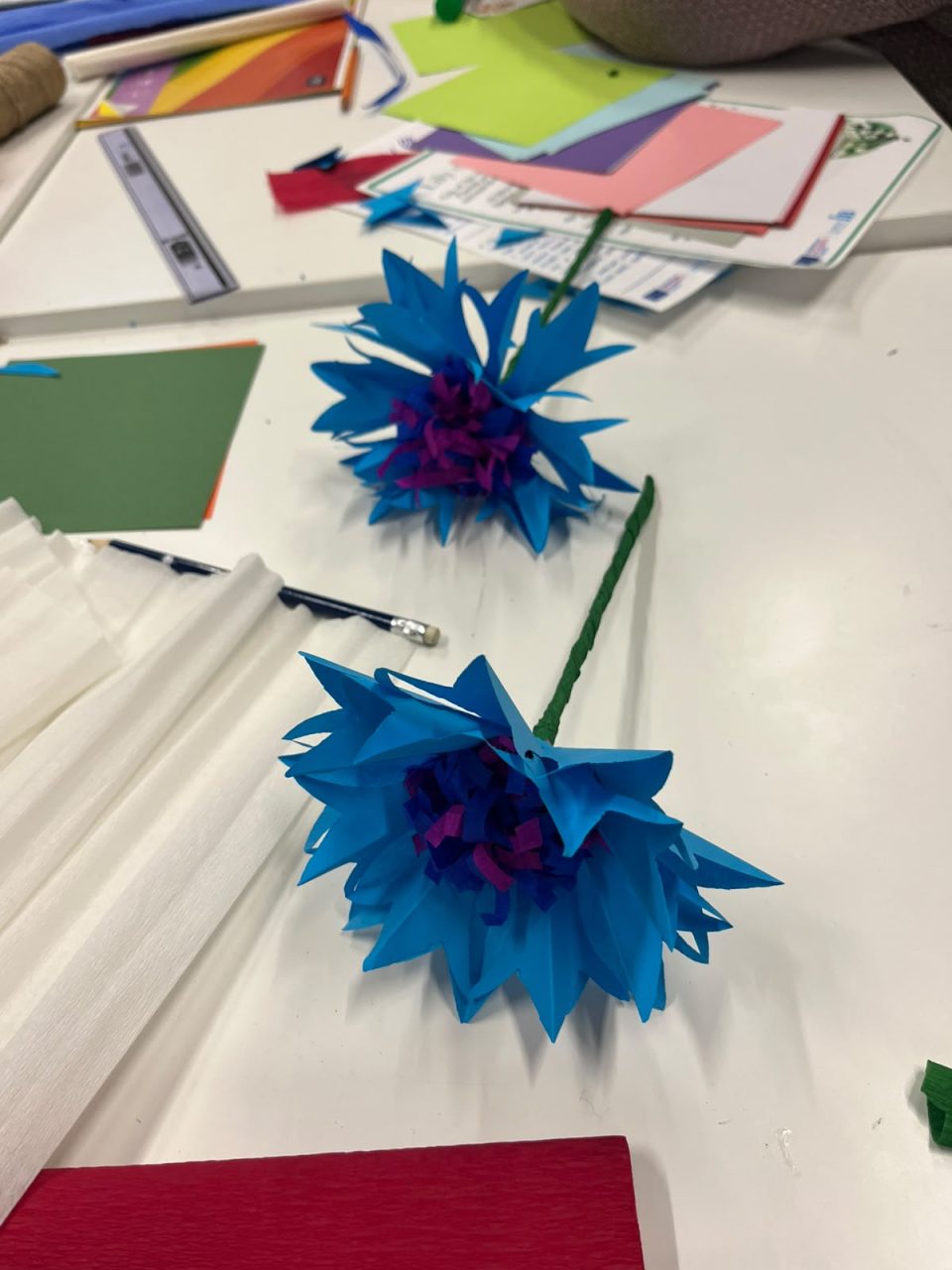
The workshop took place from 4:00 p.m. to 6:00 p.m. in one of our offices and featured the creation of five different types of flowers: the lily of the valley, the national flower of Finland; an origami lily, representing Italy; the rose, one of the most important symbols of Catalan culture; the cornflower, the national flower of Germany; and, last but not least, the carnation, one of Portugal’s most cherished national symbols.
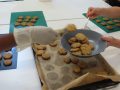
Each flower required a different crafting technique and a unique combination of materials. Participants experimented with crepe paper, coloured paper, cotton, scented soap, and meta wire, discovering a variety of creative ways to make flowers by hand. By the end of the session, everyone got to leave with a colourful handmade bouquet showcasing flowers from different European cultures.
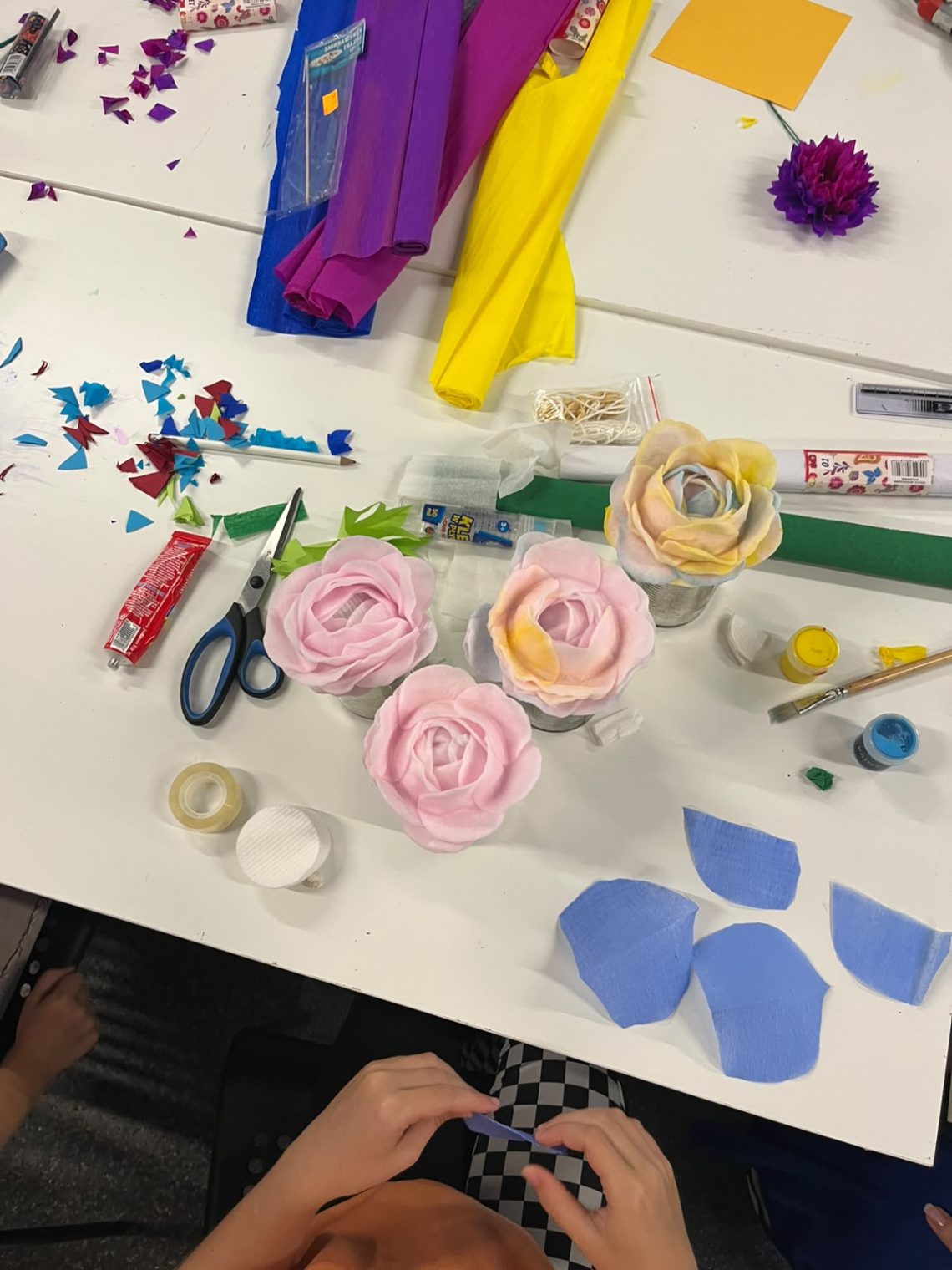
At the beginning of the workshop, most participants chose to start with the blue German cornflower, while others decided to challenge themselves with the delicate lily of the valley. Later, the younger participants enjoyed creating scented roses made from cotton soaked in fragrant soap. The soft texture and pleasant scent made this activity especially appealing to children, who happily embraced the opportunity to get their hands messy, which sometimes can be the ultimate expression of creativity.
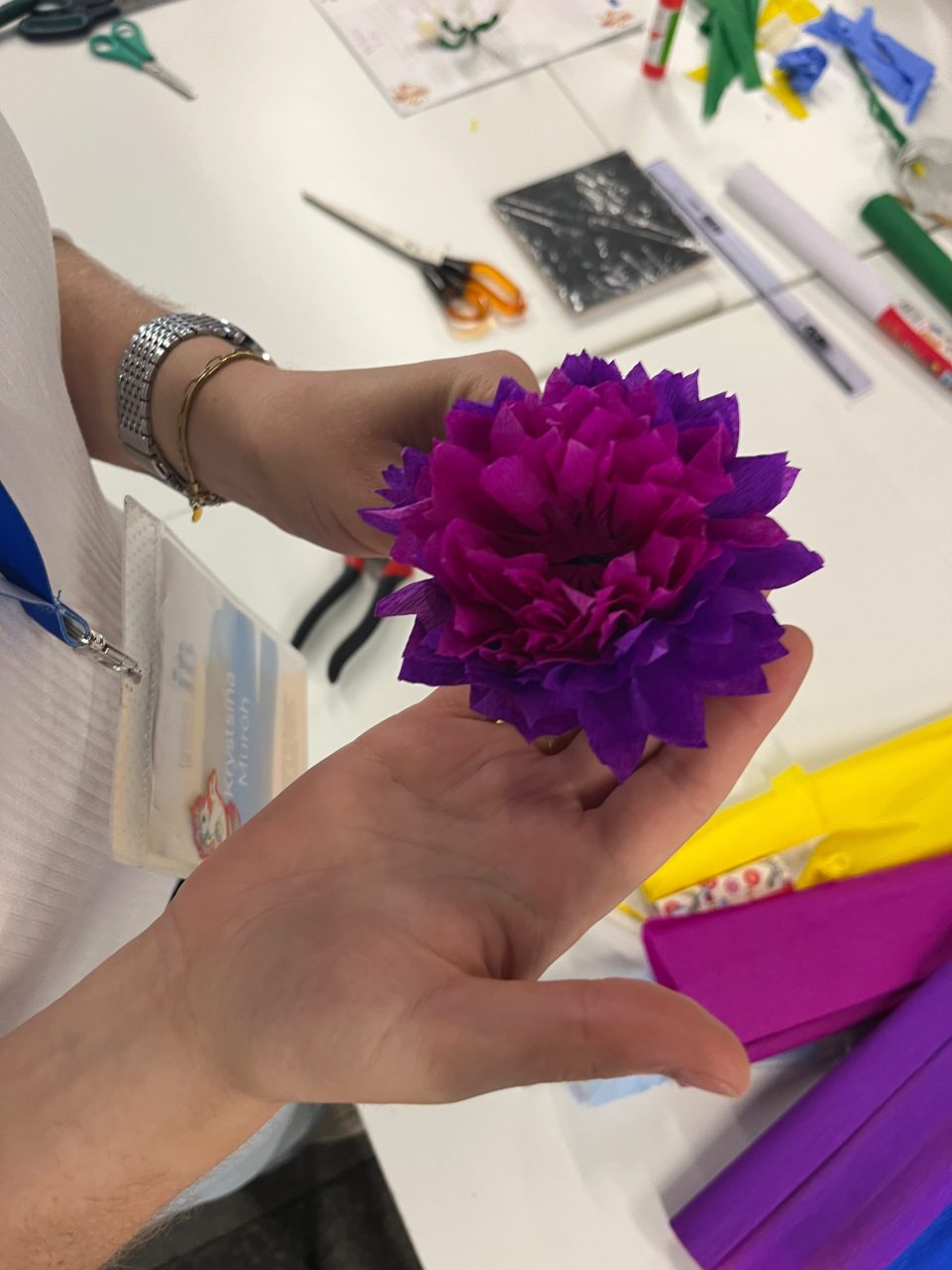
Some of the older participants also crafted carnations from multiple layers of paper. Although the technique is relatively quick, it can seem intricate and confusing at first. Nevertheless, everyone succeeded in creating beautiful and sometimes abstract flowers that reflected their own creativity. The bravest participants even tried their hand at origami, carefully folding paper into elegant lilies.
The volunteers agreed that it was a pleasure to work with such creative and enthusiastic members of the community. Everyone who attended enjoyed the workshop and was proud of the flowers they created. Seeing the participants leave with smiles, colorful bouquets, and a deeper appreciation of different European traditions made the volunteers feel that their contribution to the community through the workshops was meaningful and appreciated.
The workshop demonstrated how art and traditional crafts can bring people together, regardless of age or nationality. Through the simple act of making flowers, participants discovered the cultural stories behind each design. The volunteers were happy to introduce a piece of their own heritage and hope that the activity inspired participants to continue exploring the rich cultural diversity that Europe has to offer.
THOUGHTS OF THE PARTICIPANTS:
Eero Palmu_
The flower workshop was the perfect chance for me to get out of my comfort zone since crafts are not my biggest strength. Even though there was a language barrier between me and some participants, it didn’t really matter in the end. It felt like I was learning along with others, and it felt great getting the flowers done.
Fabienne Rosset_
Doing an origami flower was not the easiest choice, and every time I was scared it wouldn’t turn out as it should. However, in the end the flowers, even if not perfect, turned out nice and the people who tried them were satisfied with the result.
Bet Tous_
At the beginning of the project, I was worried when no one chose the flower I had made. I was anxious that it might have seemed too simple or not appealing enough. Nevertheless, it was a great relief to have the opportunity to do my best as a handicraft teacher and to see that the children truly enjoyed making the roses. Many of them were so happy with the results that they even crafted more than one. It was also very rewarding to see someone choose the carnation I had made and to have the chance to teach a technique that I personally enjoy so much.
Hannah Mix_
In the beginning, it seemed to be a ‘simple’ workshop; nevertheless, it turned out to be an amazing and creative chance to connect with the local community. I am proud I could represent the German national flower and the culture in this way. Although I was confronted with the language barrier and the high demand on participants, I gladly accepted the challenge, and the results turned out to be beautiful.
Article by Bet Tous
European Solidarity Corps volunteer
European Solidarity Corps volunteer of 21/07/2026

Comments by admin