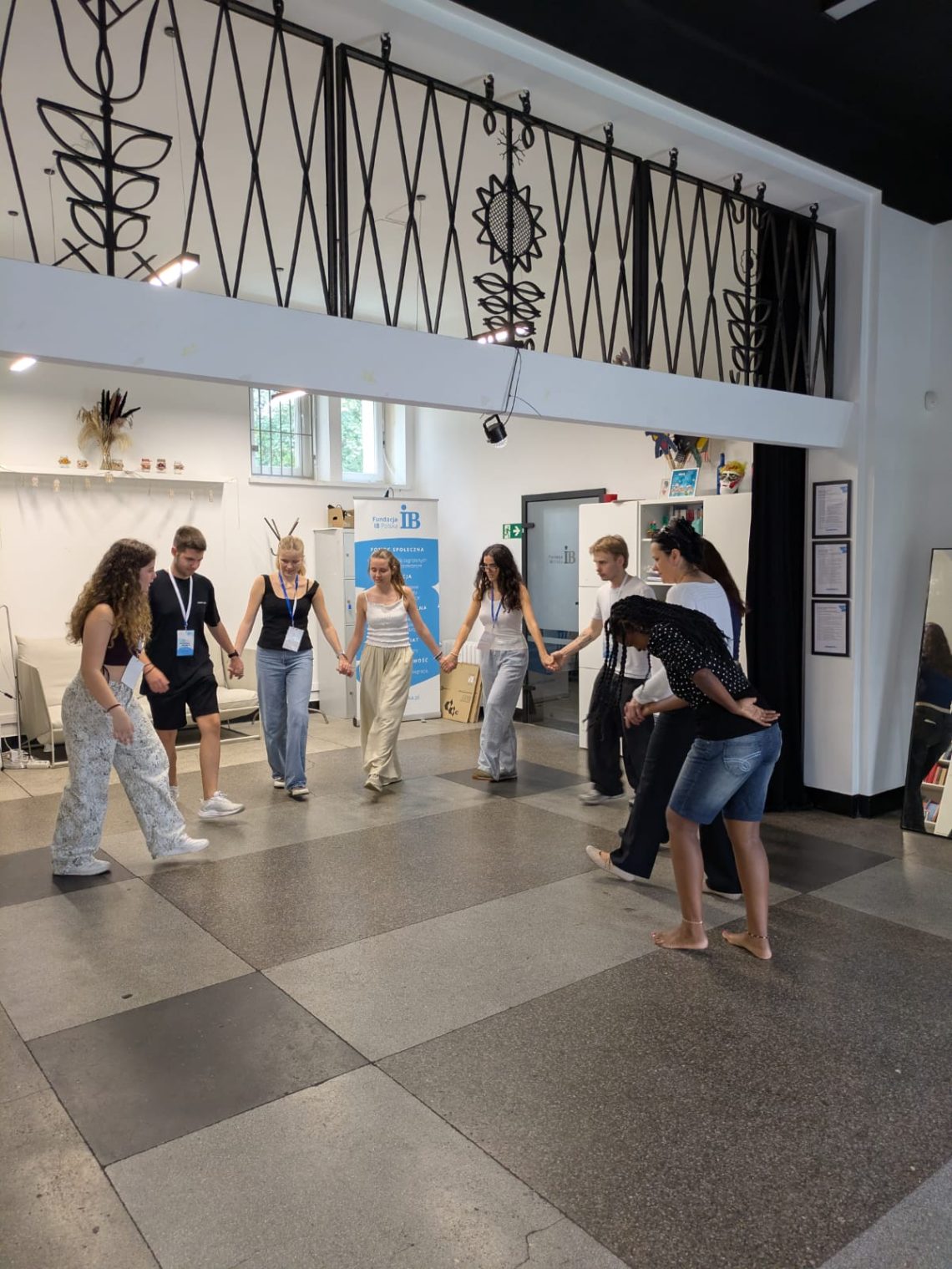
As volunteers, we are always looking for unique ways to connect, and our recent traditional dance workshop did exactly that. The event promised a vibrant journey through the rhythmic heritages of Portugal, Finland and Greece.
As the workshop was about to begin, we found ourselves waiting for a few more participants to arrive. Just as we were getting started, two more people from Poland and America joined the group, bringing the perfect energy to kick off the session.
We began our journey in Portugal. Rita and Adriana stepped up to lead us in a high-energy dance set to “Baba Baba” by Buraka Som Sistema. This style, heavily influenced by Kuduro, features fast footwork, powerful body movements, and expressive freestyle elements. Rather than focusing on strict, rigid choreography, it emphasizes rhythm, raw creativity, and pure confidence. Everyone absolutely loved it because it was an intense, high-energy workout, but it created a truly unique and unforgettable moment for all of us. What started as a dance lesson quickly turned into an awesome collaboration, where we all worked together to catch the vibe, find our own momentum, and just vibe out as a group. It was an intense workout, but honestly, it was the perfect way to share an unforgettable moment and have a great time together.
After the high-intensity energy of the Portuguese rhythm, the Finnish dance, “Letkajenkka” taken over by Eero, was the absolute perfect change of pace. It was an awesome sight to se so many people gathered together, moving as one, and just having a blast. It turned out to be a fantastic “active break” which was simultaneously hilarious, outstanding, and a great way to bond as a group. Unlike the fast freestyle of the previous dance, Letkajenkka is delightfully simple and incredibly inclusive. We formed one long, laughing line, with everyone holding the shoulders or waist of the person in front of them. Moving in perfect sync with the music, we followed a simple, repeating pattern of steps and kicks.
Next up, it was time to immerse ourselves in the rich traditions of Greece. We began with Kalamatianos, which is widely considered Greece’s national dance. Originating from the region of Kalamata, it is a famous folk dance performed in a circle, with dancers holding hands and moving to the right around the circle.
To be honest, it was quite a challenge at first. The dance features a lively, unique 7/8 rhythm and a repeating 12-step pattern. In the beginning, people couldn’t follow the steps correctly and failed miserably. But thanks to the patient and correct guidance of the two Greek volunteers called Mary and Alexandros, they finally found their footing, got the rhythm down, and danced it beautifully.
After conquering that difficult process, the Greek volunteers decided to switch gears and introduce us to “Hasaposerviko”. This dance is performed in a line or semicircle, with everyone holding each other’s shoulders and moving in perfect unison. It features quick steps, hops, and energetic footwork, creating a fast and exciting vibe. Because it was much easier to pick up than Kalamatianos, everyone relaxed, nailed the steps perfectly, and just had an absolute blast letting loose.
More than just learning new steps, this workshop was a beautiful reminder of what volunteering is all about. It brought people from different corners of the world together forcing us to communicate, collaborate, and find our collective rhythm. By the time the music stopped, we hadn’t just mastered a few international dances but we had created unforgettable memories and bonded in a way only music and movement can bring.
Article by Alexandros Sarimveis
European Solidarity Corps volunteer
Workshops from European Solidarity Corps volunteer of 15/07/2026

Comments by admin