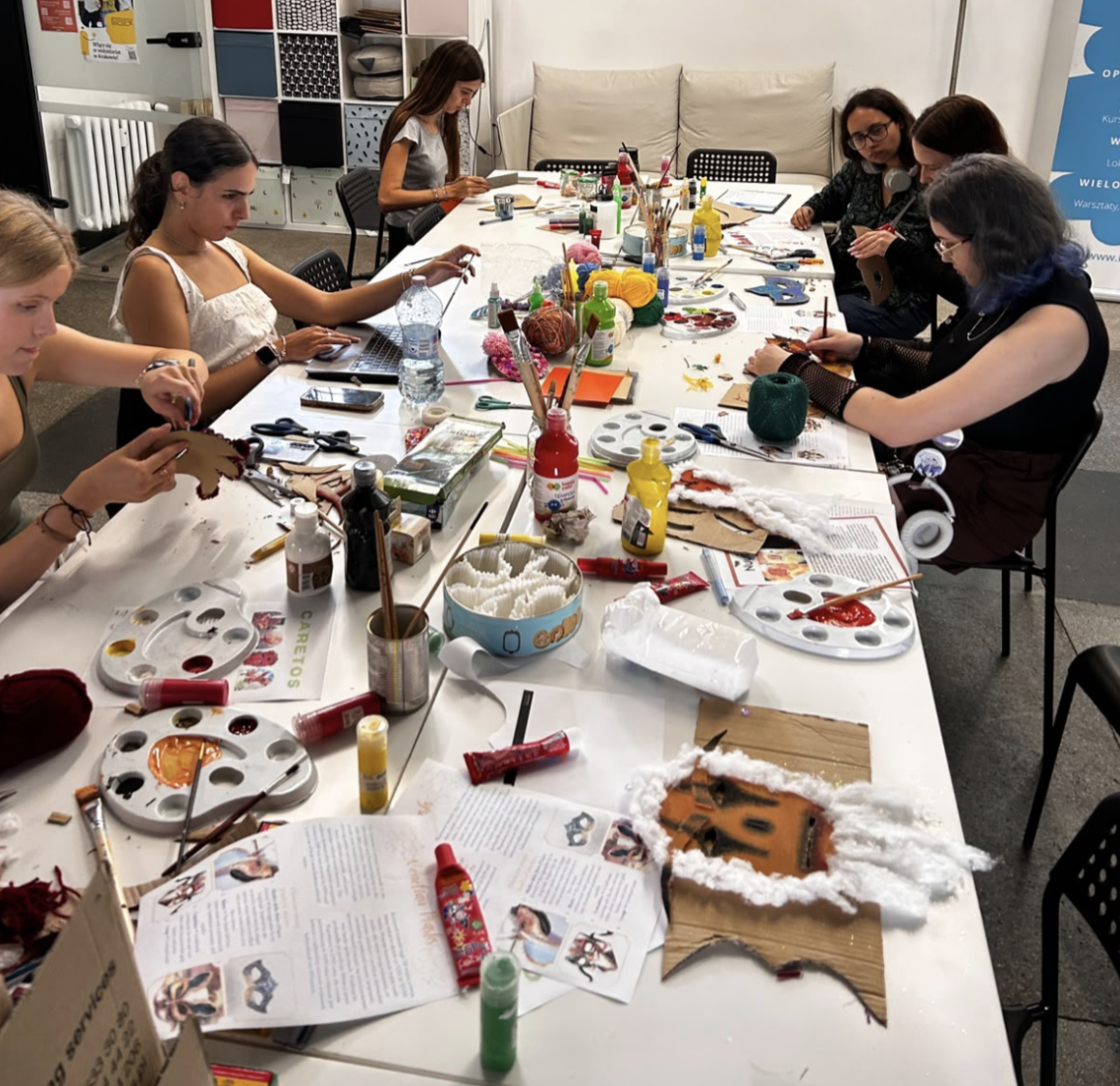
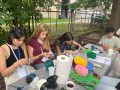
On Thursday, we organised a mask-making workshop at the Multicultural Centre in Kraków. The event was open to the public where IB Polska volunteers and members of the local community came together.
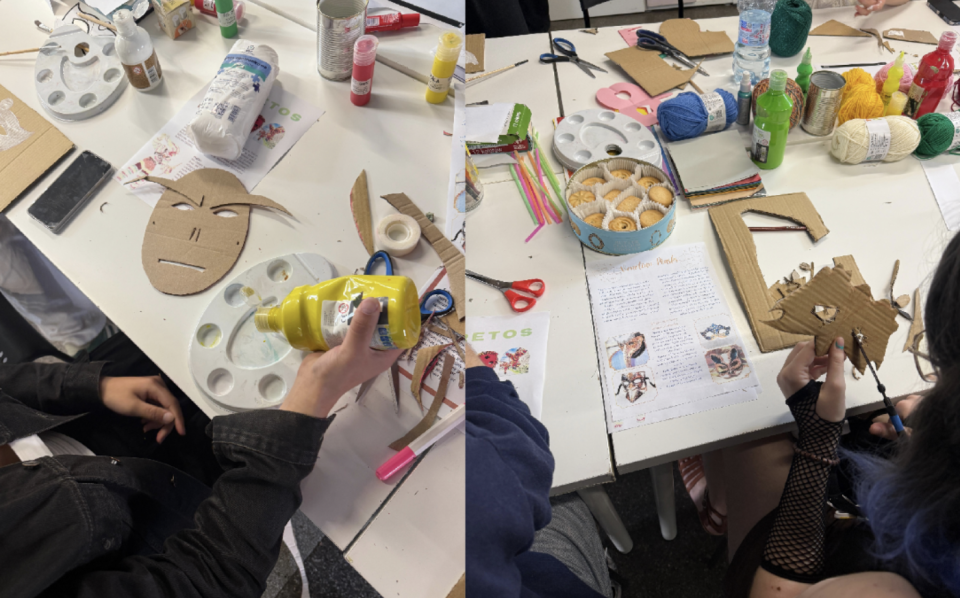
Participants explored cultural traditions through art by creating masks inspired by three different countries: Portugal, Italy, and Finland. The Portuguese, Italian and Finnish. Each mask showed different artistic styles from these countries.
Inspired by the Caretos tradition, we created our own masks during the workshop. The Caretos are striking, masked figures from the Carnival of Trás-os-Montes in northern Portugal, known for their vibrant fringed costumes, wooden or tin masks, and belts lined with cowbells. Rooted in ancient pagan rituals, this tradition symbolizes the transition from winter to spring and the renewal of nature, and is now recognized as part of UNESCO’s Intangible Cultural Heritage.
We also made masks inspired by the Venetian Carnival. This tradition, dating back to the 11th century, allowed people of all classes to celebrate together in anonymity and remains one of Italy’s most iconic cultural events today. We learned about different types of masks, such as Medico della Peste, Bauta, Colombina and Gnaga.
Additionaly, we created masks based off the Finnish folklore, the Nuuttipukki tradition. Celebrated on St. Knut’s Day (January 13th), it marks the end of the Christmas season. Traditionally, masked figures went from house to house to drive away evil spirits, while today the custom lives on as a playful activity where children dress up, visit homes, and celebrate together.
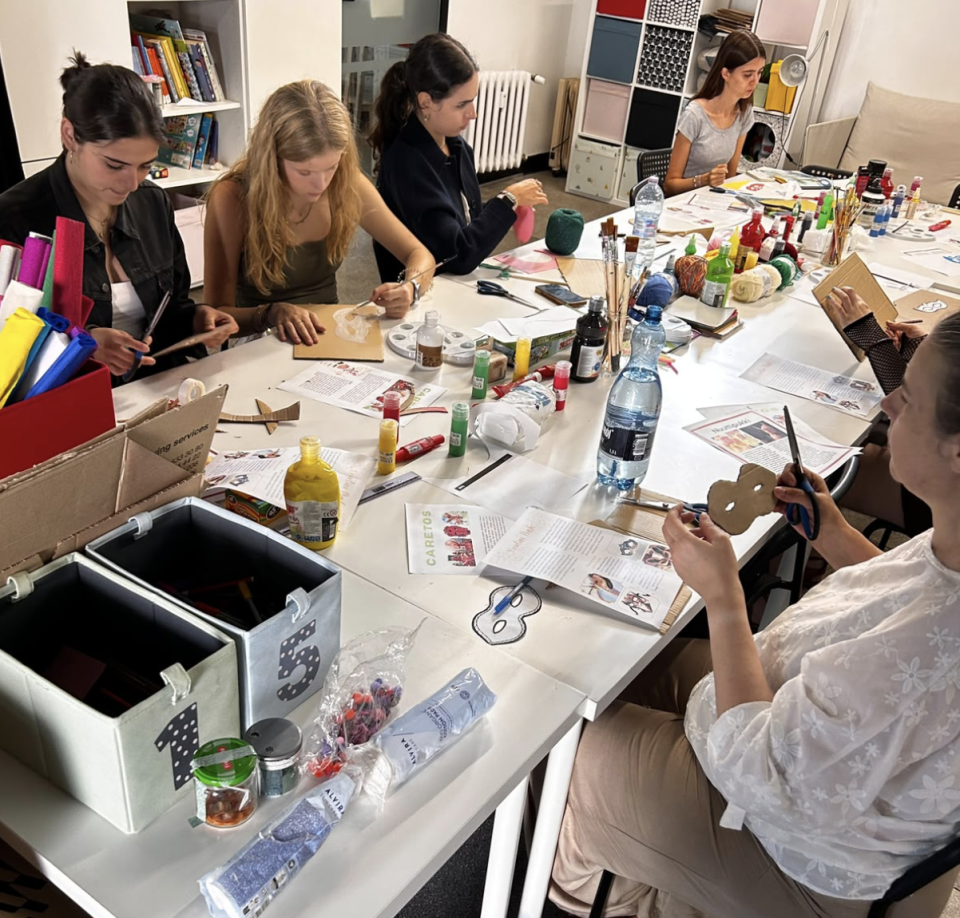
Participants had the chance to make their own special masks, which they could wear, use as decoration, or give as a gift. During the workshop, they also learned a little about the background of each mask.
Article by Rugilė
European Solidarity Corps volunteer
Workshops from European Solidarity Corps volunteers of 16/07/2026

Comments by admin