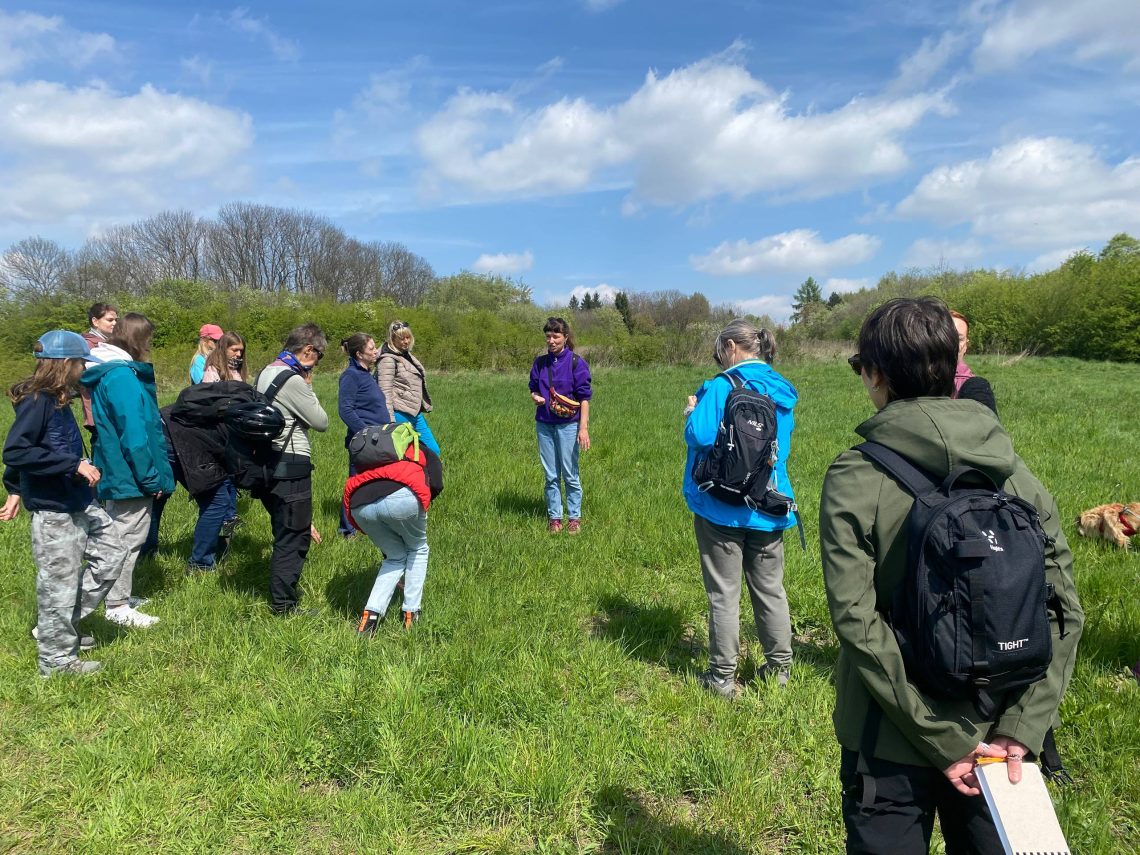
The meeting focused on soil and its role in agricultural and landscape ecosystems. During a three-hour field walk, we explored different environments, observing their structure and the changes occurring under human influence.
Agricultural landscape and the role of soil
At the first stop, we discussed the agricultural landscape and how farming practices affect soil quality and ecosystem health. Particular attention was given to how land use influences biological structure and biodiversity.
Meadow ecosystems and the process of overgrowth
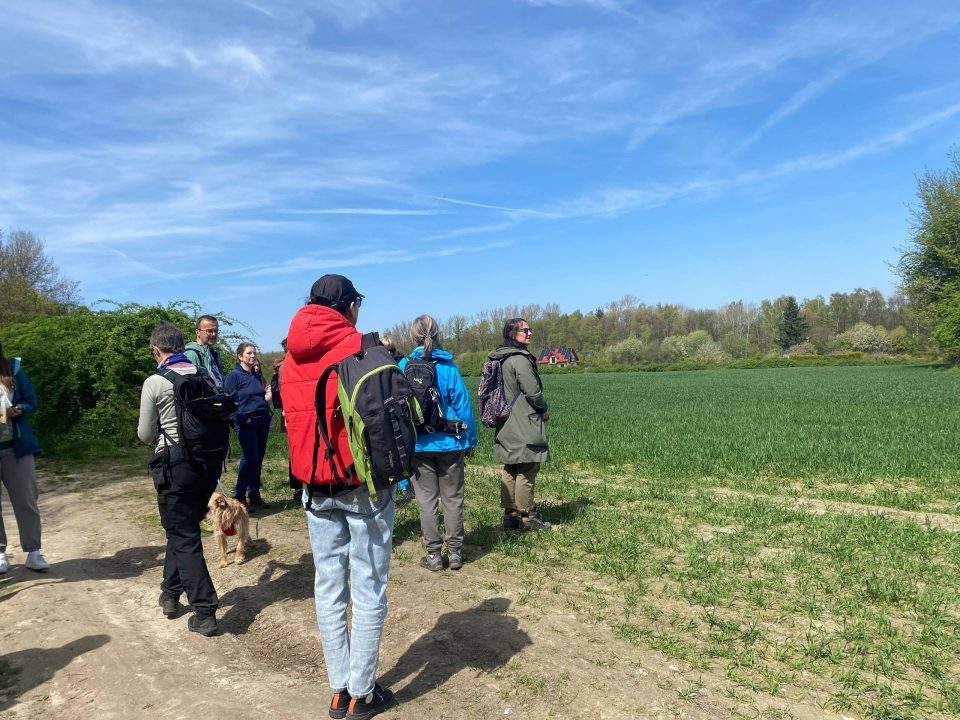
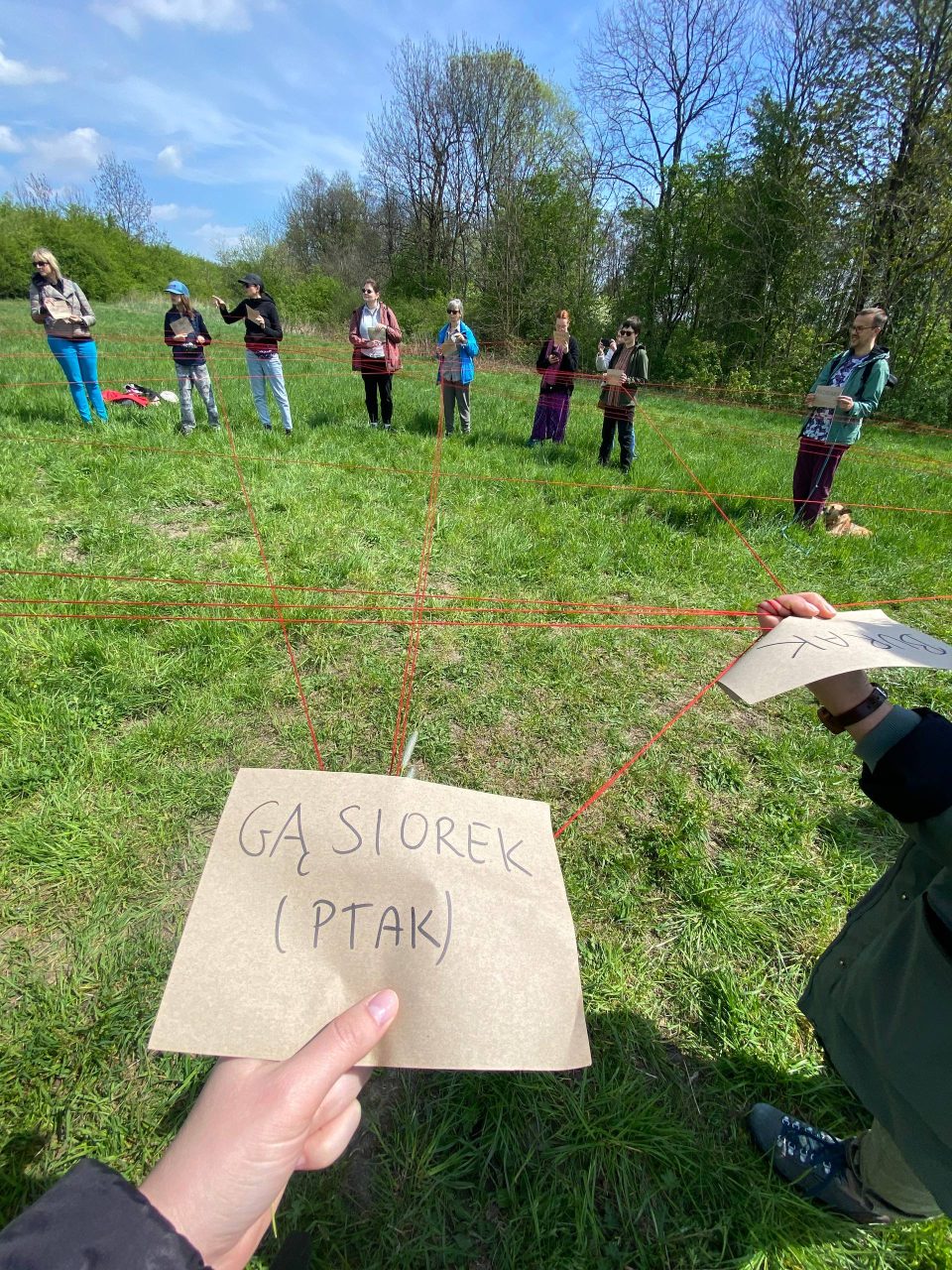
An important part of the walk was observing two types of meadows and the process of their gradual overgrowth by shrubs and trees.
In many areas, open spaces are transforming into shrub- and tree-dominated environments. This leads to a decline in biodiversity, as plant species adapted to open habitats disappear.
This process directly impacts:
- pollinating insects (including butterflies),
- bird species that nest in open meadows,
- overall ecosystem complexity.
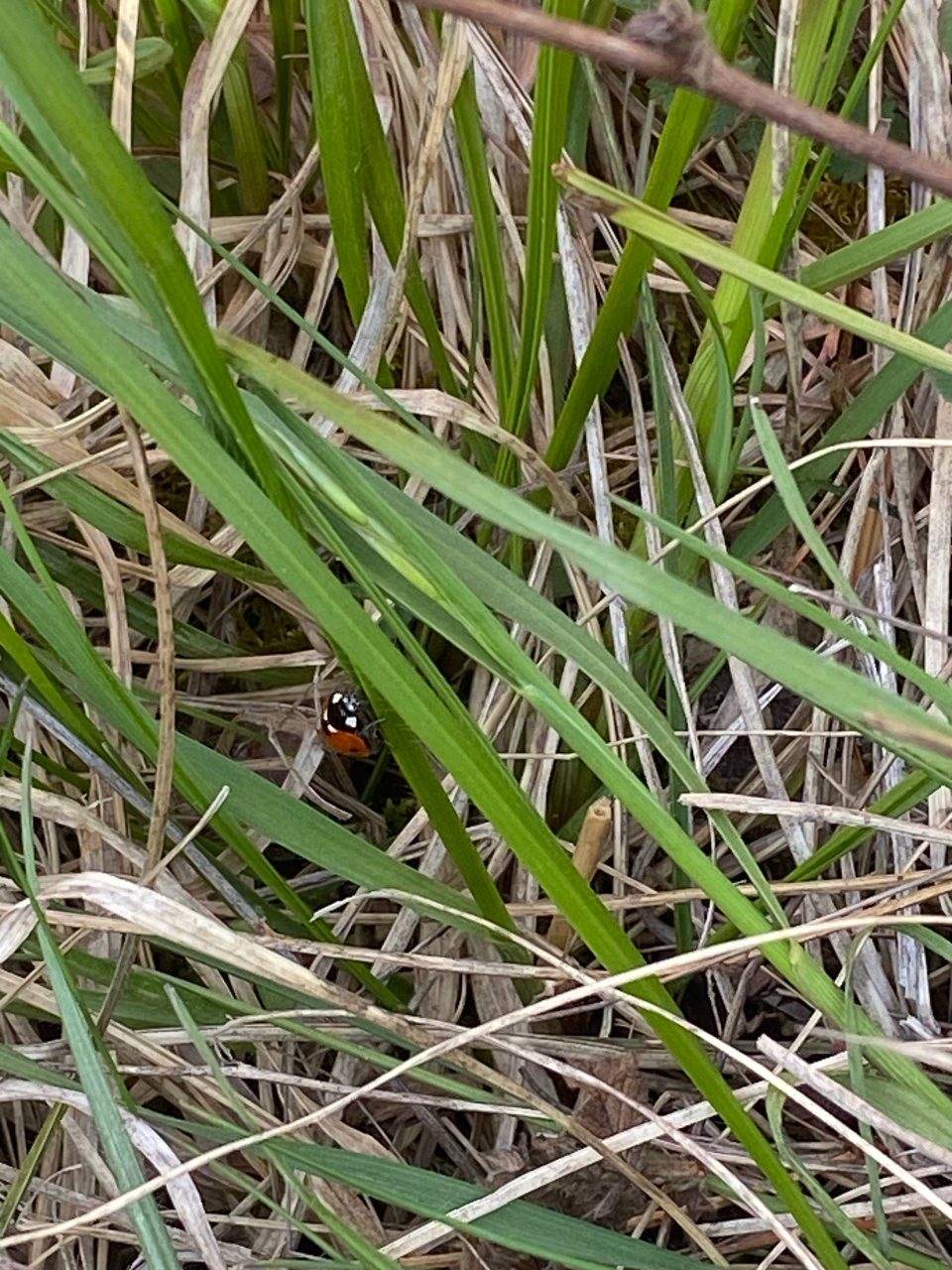
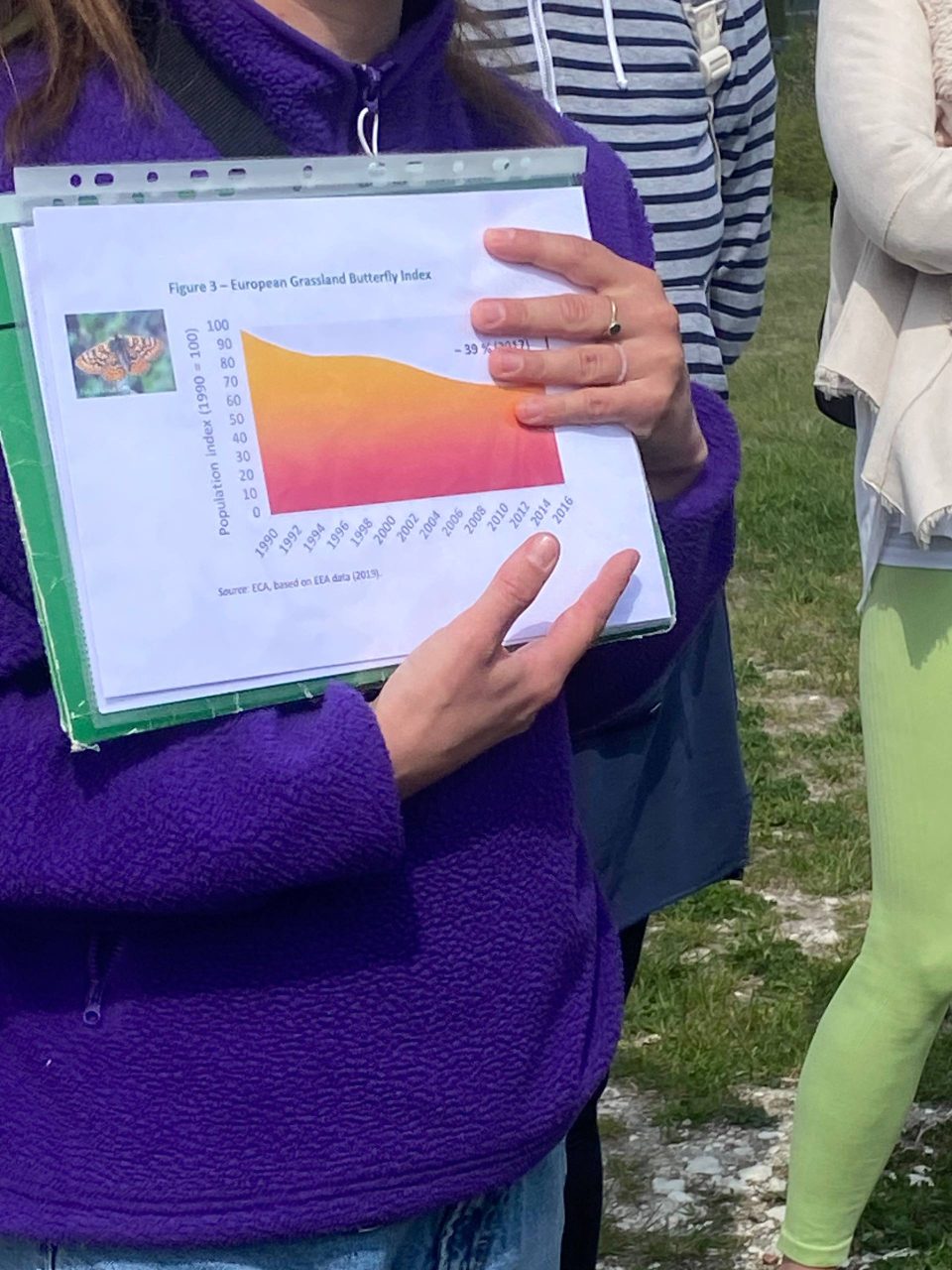
Across Europe, a decline in butterfly populations has been observed, partly due to the disappearance of traditionally managed meadows (mowing or grazing), which are essential for maintaining plant diversity.
Species and field observations
During the walk, we identified and discussed selected plant and animal species typical for this area, including:
- blackthorn (Prunus spinosa) as a dominant shrub,
- early spring plants preferring sunny habitats,
- selected bird and insect species.
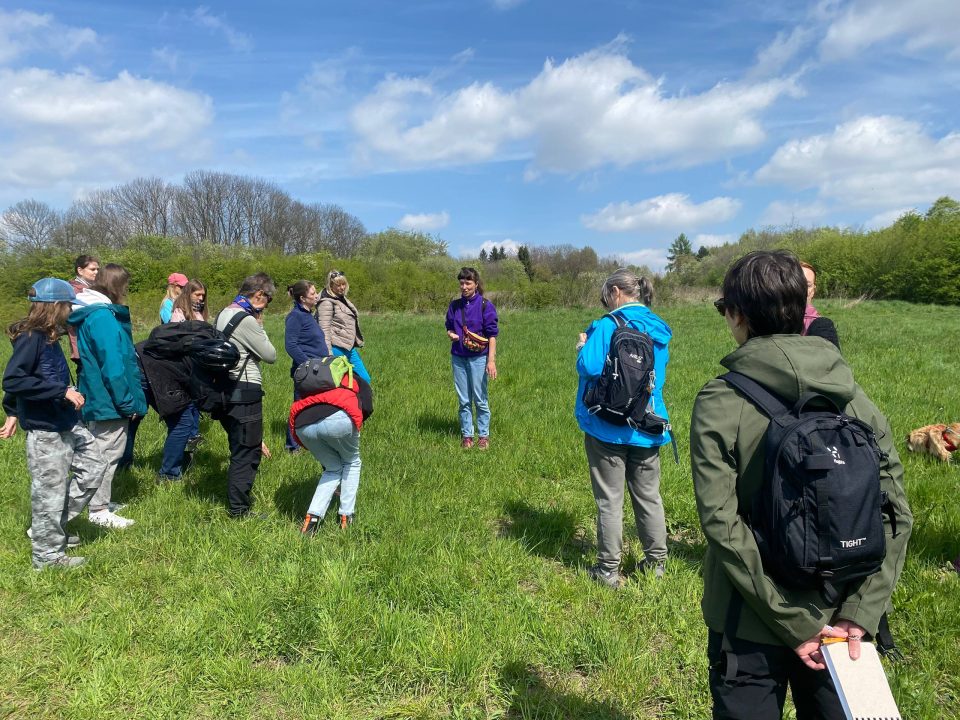

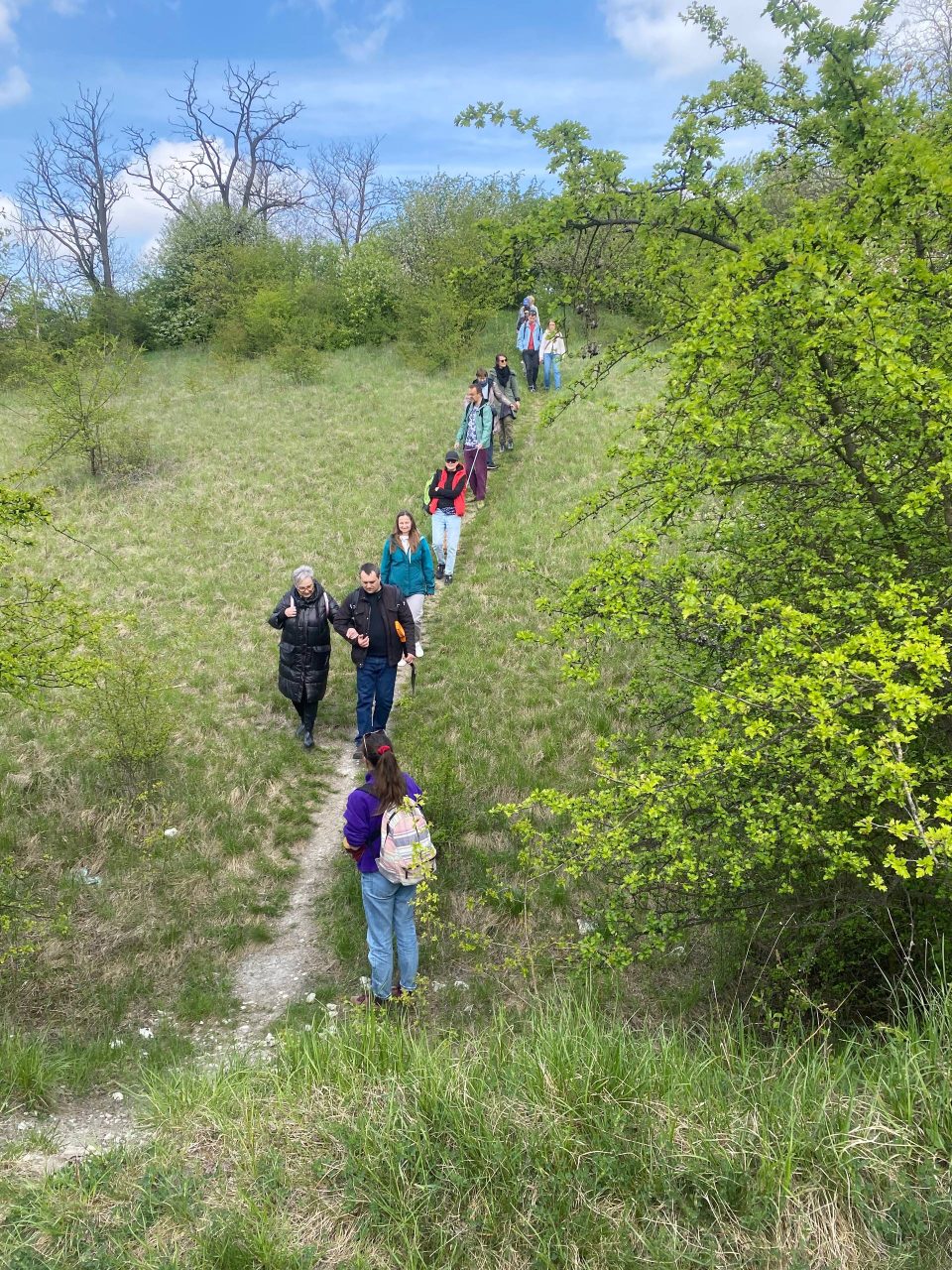
It was emphasized that greater plant diversity leads to a more stable and resilient ecosystem, supporting insects, birds, and microorganisms.
The role of trees in the ecosystem
We also discussed the ecological role of trees. Key observations included:
- older trees provide greater ecological value than younger ones,
- they serve as habitats for insects and organisms associated with dead wood,
- they support natural soil regeneration processes.
Dead wood and organic matter decomposition are crucial for nutrient cycling in ecosystems.
Tools for nature observation
We also explored digital tools supporting field observations of birds:
- Merlin Bird ID
- BirdNET
These applications allow identification of bird species based on sound recordings.
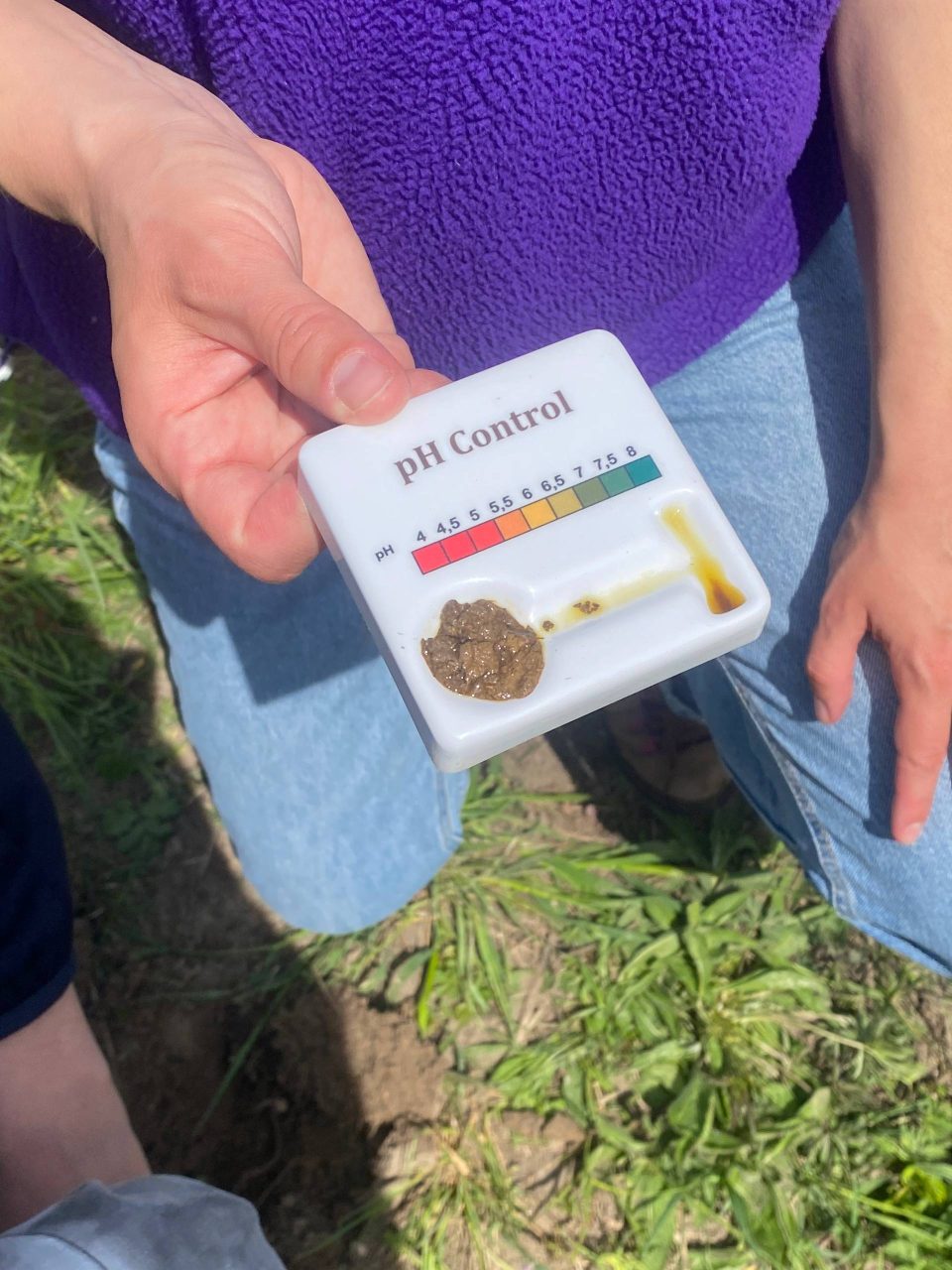
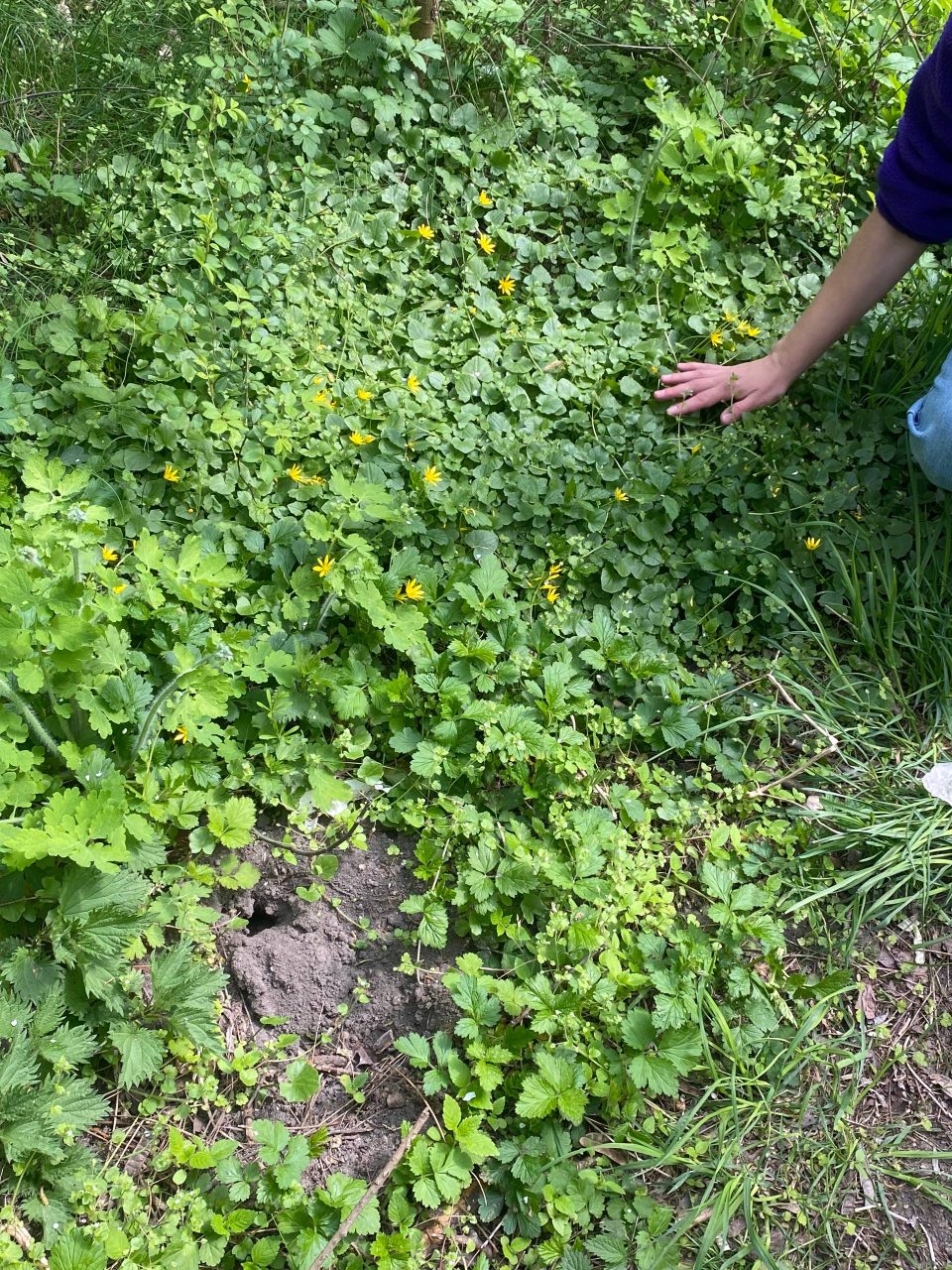
Soil analysis
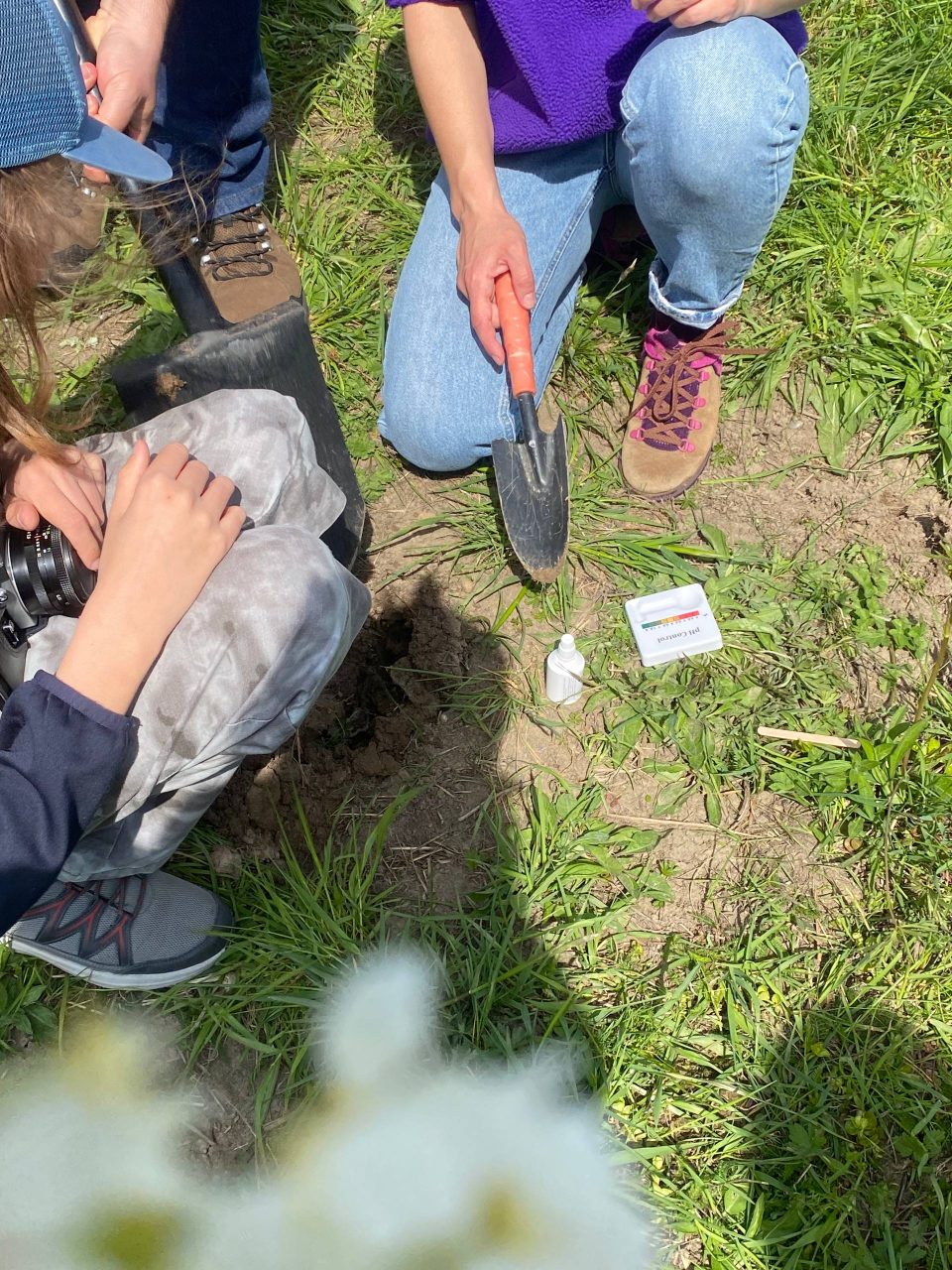
As part of the fieldwork, a basic soil analysis was conducted:
Conclusions
The meeting highlighted that meadow ecosystems are strongly dependent on land management practices. The absence of mowing or grazing leads to natural succession and the gradual loss of habitats for many species.
Biodiversity — both plant and animal — is directly linked to maintaining open and diverse landscape structures.
The meeting was organised by Zarząd Zieleni Miejskiej w Krakowie – May 25, 2026
Article by Krystsina Muroh –
ESC assistant project coordinator
from 06/05/2026





Comments by admin