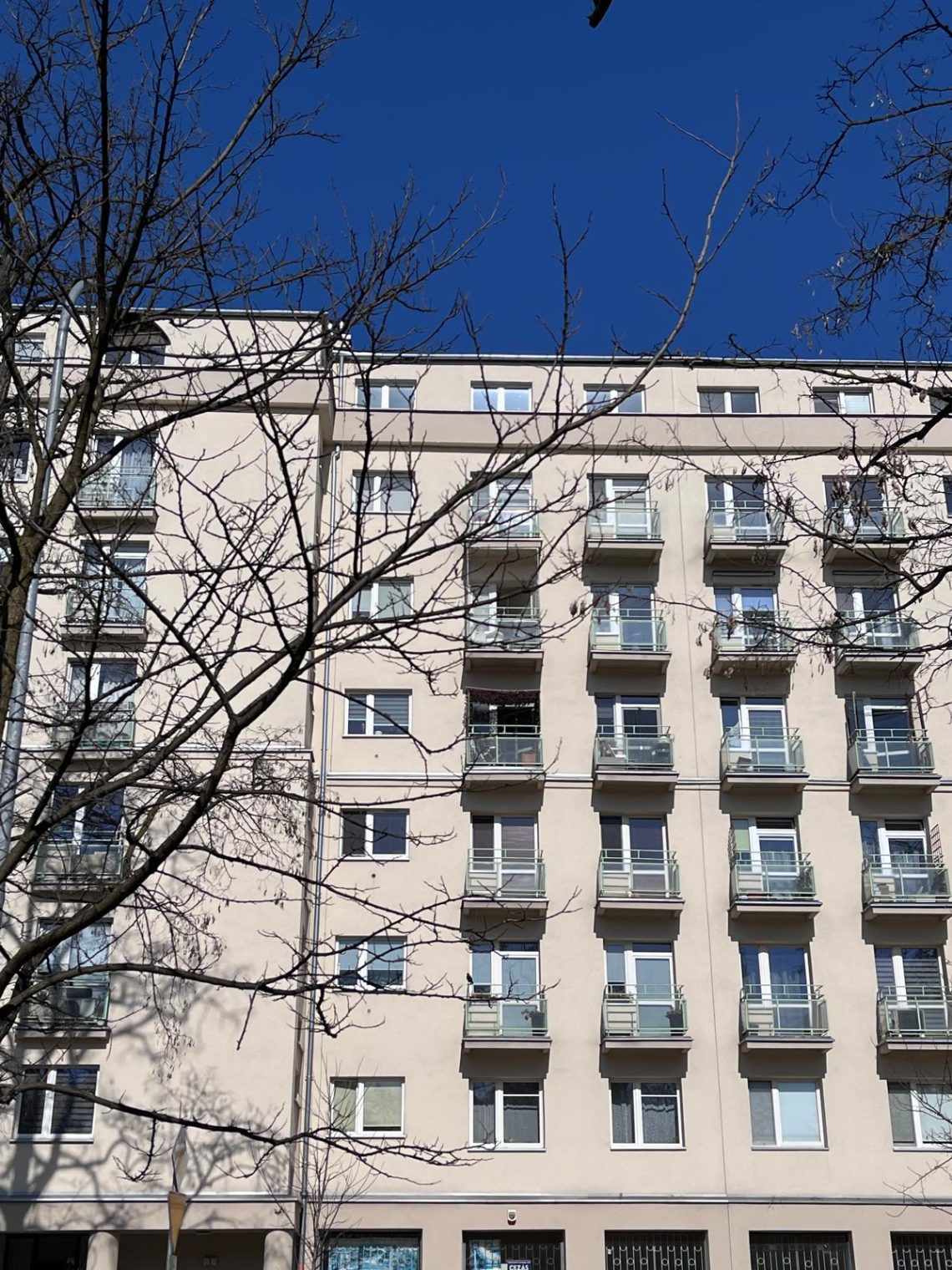
Nowa Huta as a quarter of Krakow first seemed like a really scary place. Everything looks the same, and at the beginning, when I started to work in the office, it felt like a dystopian movie. I thought I didn’t really need to check out more about this area, because anyway it looks the same wherever you go. Now, half a year later, I know places to go to, and I see this part of Krakow very differently.
Nowa Huta was built in the late 1950s as a separate city. It was designed in the style of a Stalinist utopia and was supposed to be a city for proletarians. At that time, it was the “ideal city” for around 100 thousand people.
At first, you can clearly see the communist style of architecture, but when you look more precisely, you will notice the influence of different époques.
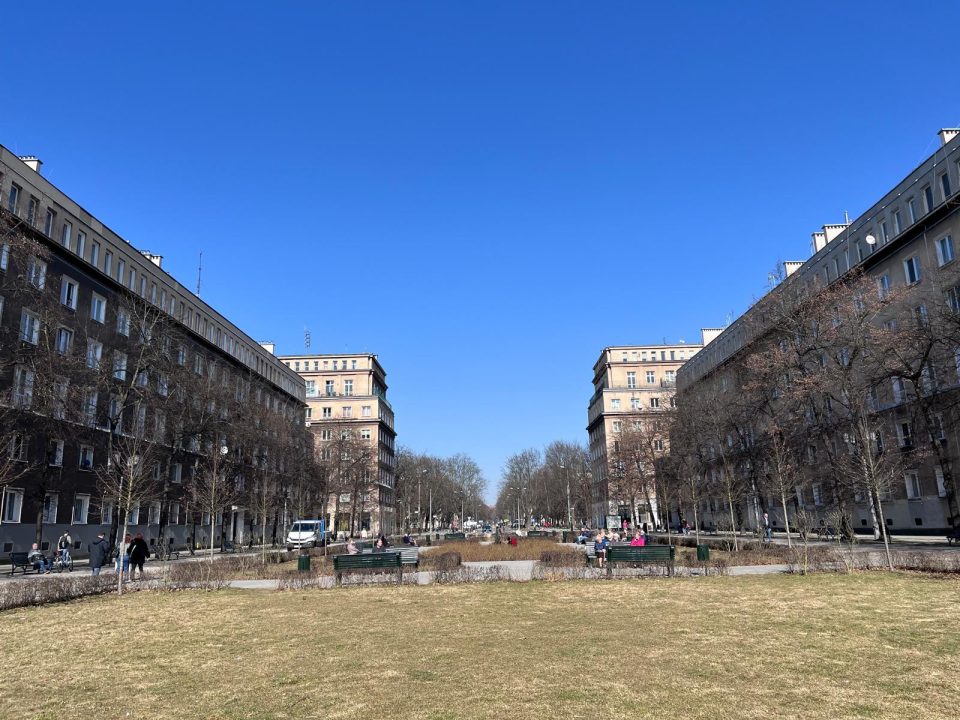
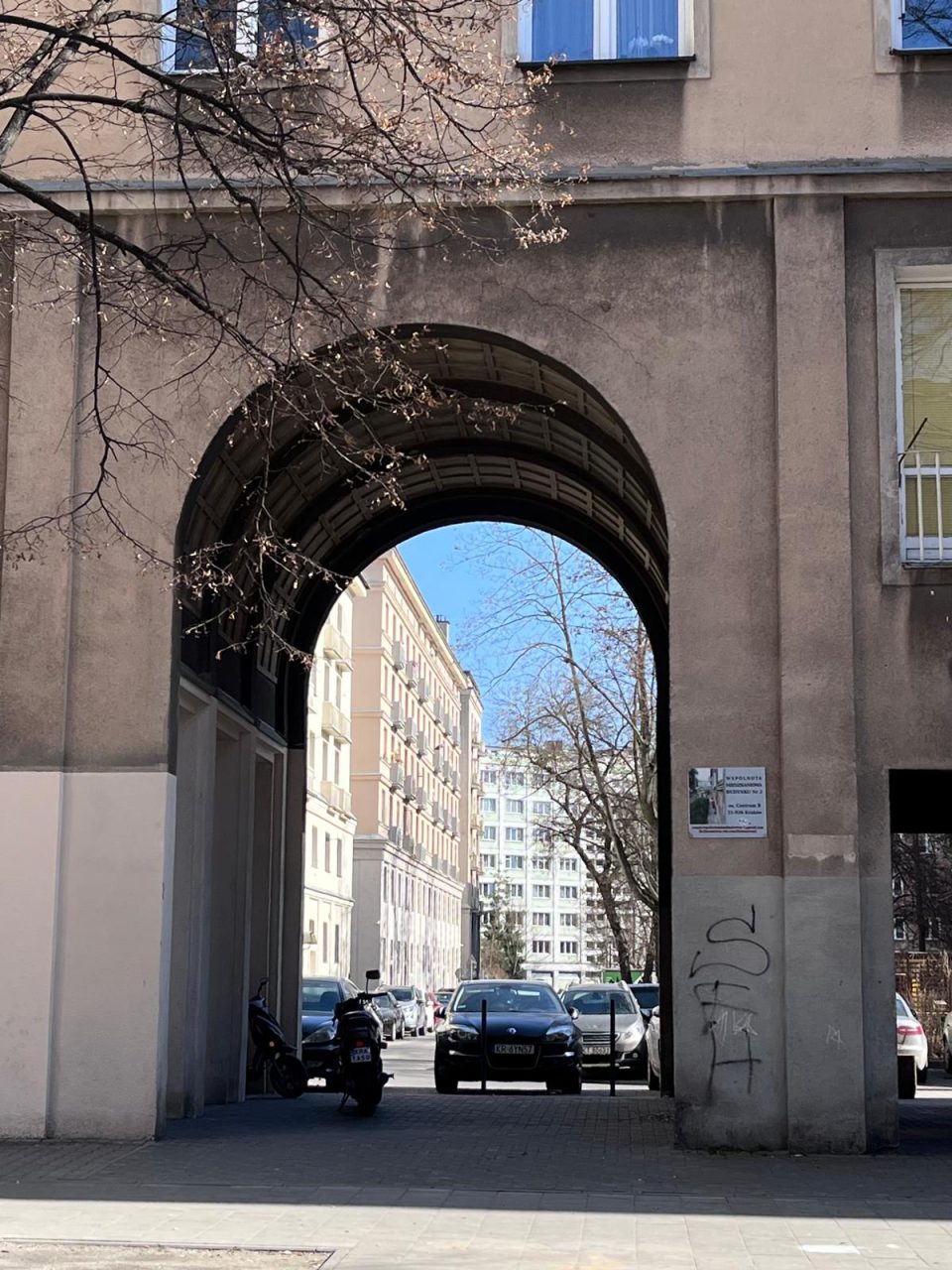
I recently noticed that the Plac Centralny, which is the main square, reminds me in a way of Baroque architecture. I think it is mainly because of the symmetrical construction of the streets. But the Renaissance also influenced the architects. You can mainly see that in the arches as a decorative part of the buildings.
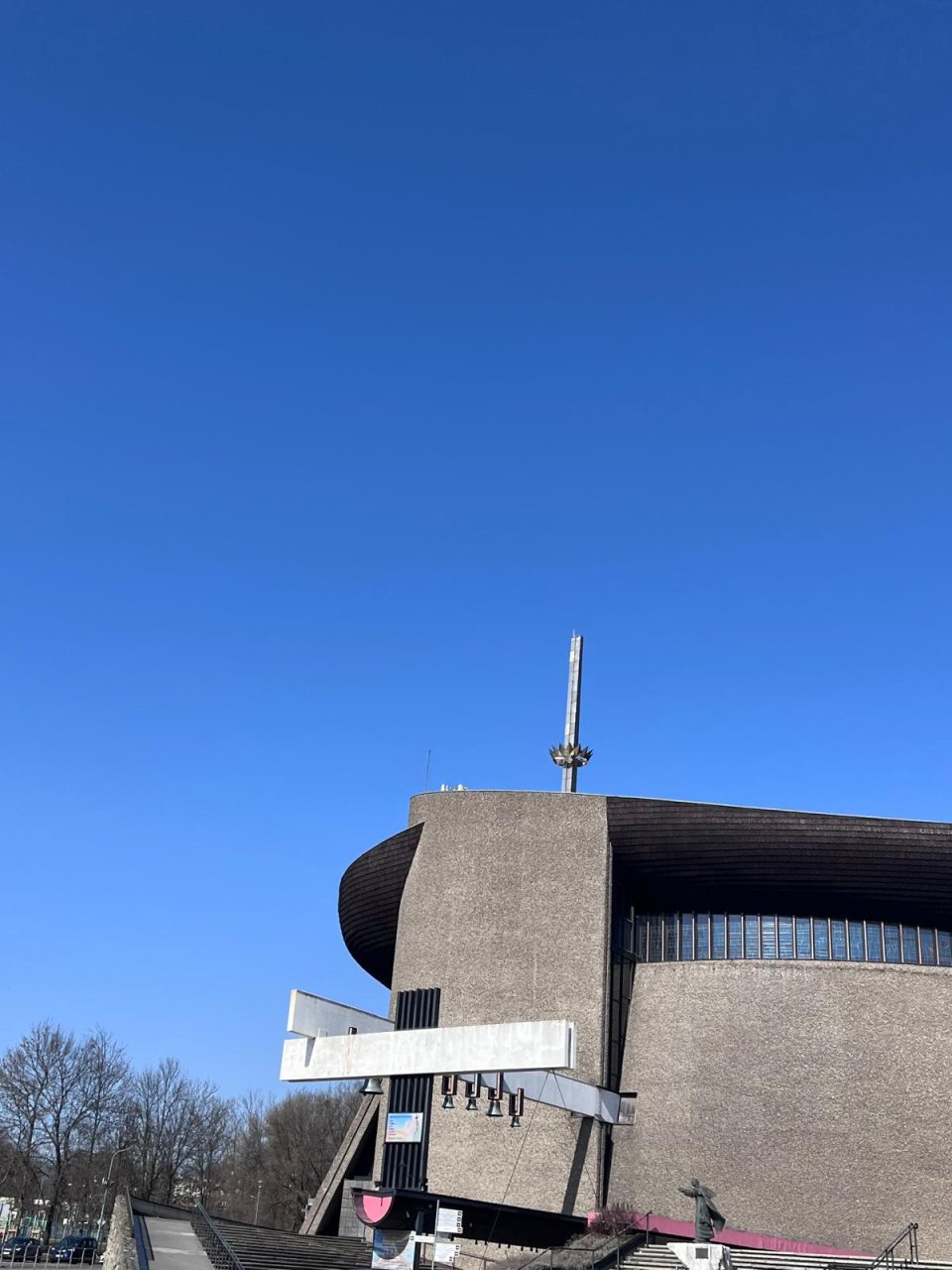
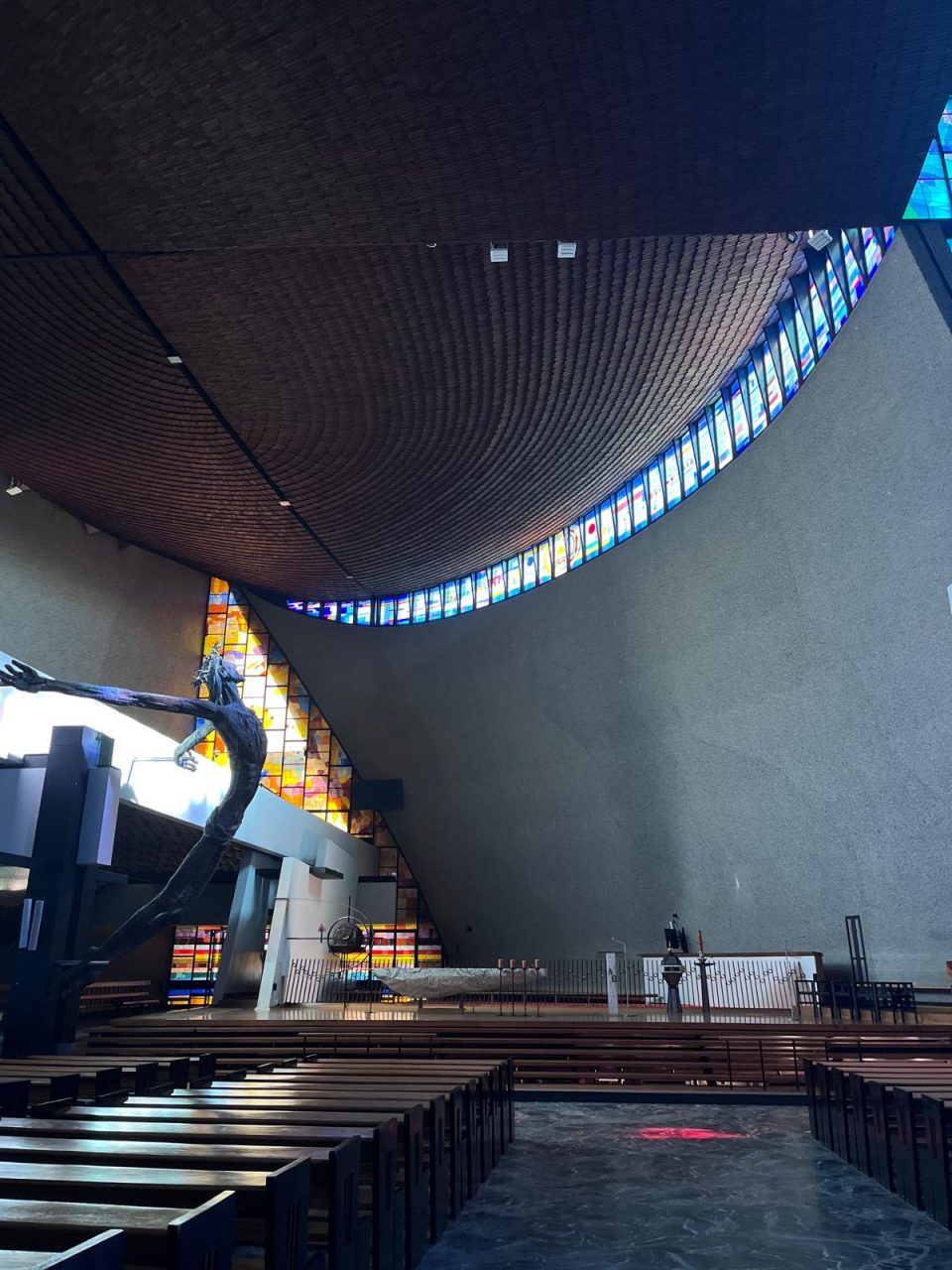
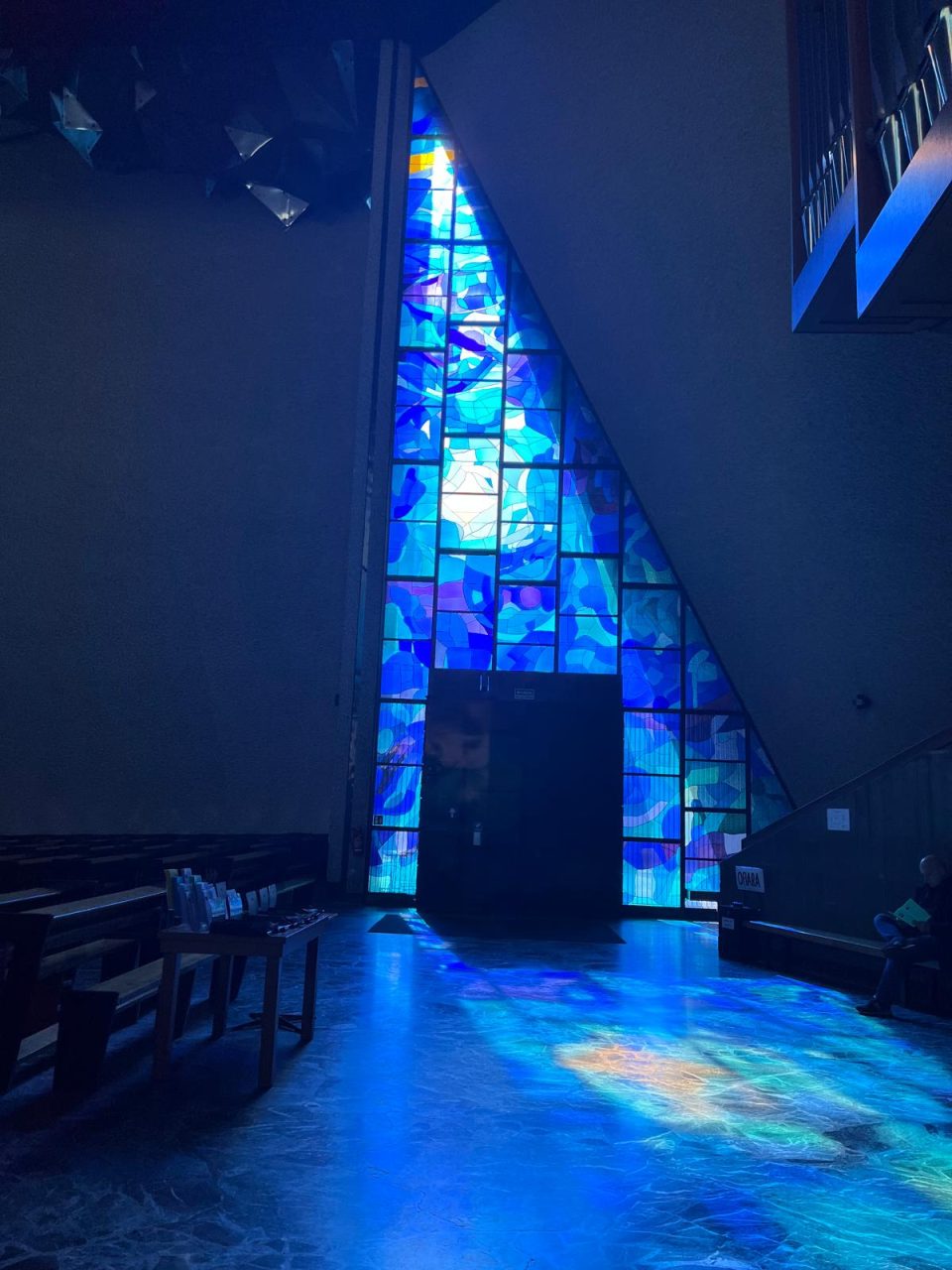
Speaking of architecture, modernism and postmodernism are also visible around the quarter. Especially the church Arka Pana (Lord’s Ark Church) is extremely impressive from the inside. It was built between 1967 and 1977 and is inspired by the Notre-Dame du Haut in France by Le Corbusier. After the political liberation of the Polish October (1956), Polish architects were allowed to travel to Sweden to learn more about urban design. You can see that in other buildings around Nowa Huta.
These days Nowa Huta is not the same grey and monotone place it used to be. Of course, the colors of the houses stayed the same, but when I walk around, mainly the green of the parks and the different cultural offers and cafés catch my attention.
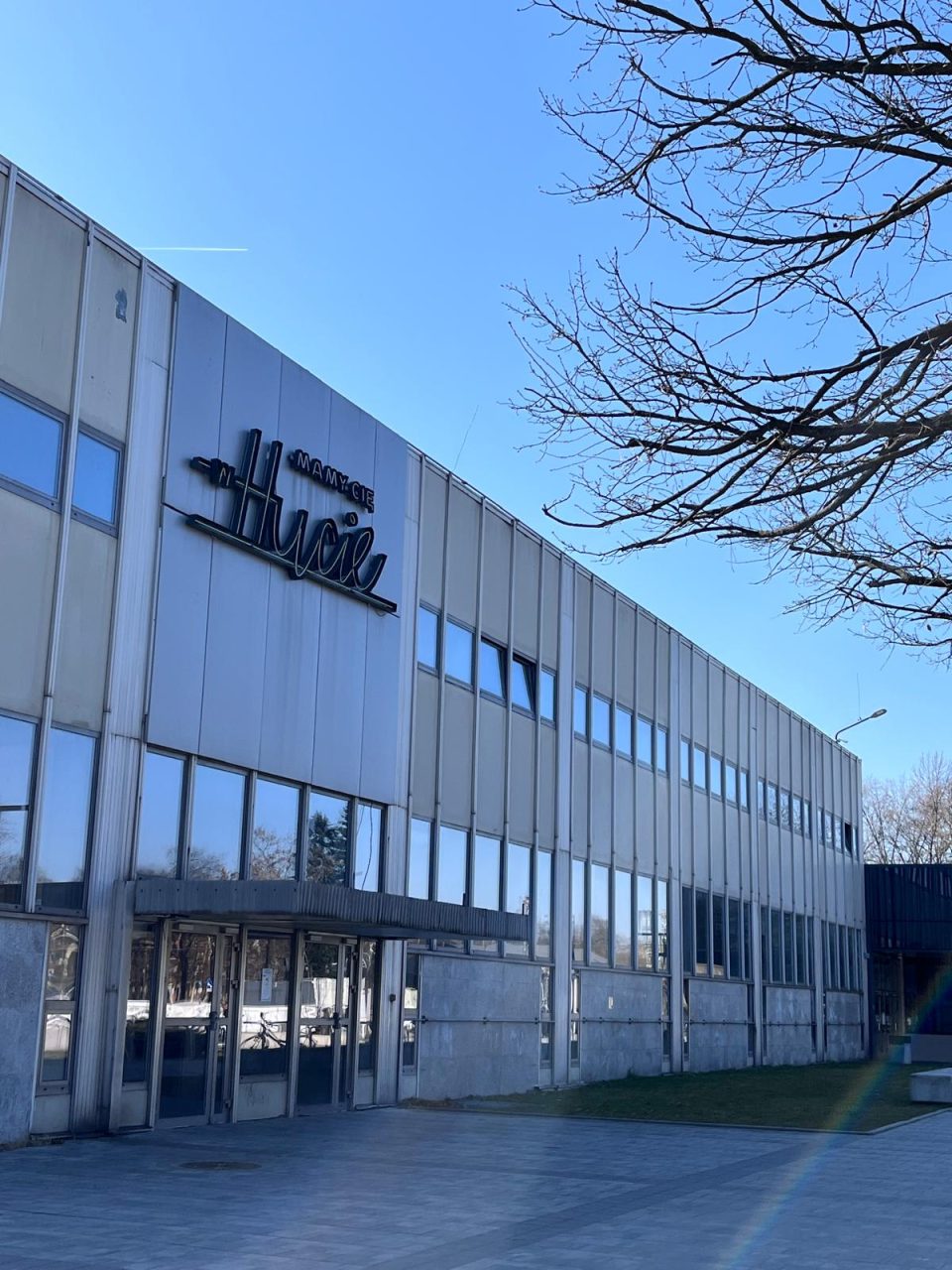
Now, being here for more than half a year, I am happy to have the opportunity to work here and learn more about this special place. When I get visitors, I always want to show them this part of the city because it shows more than just beautiful buildings like in the Old Town. It represents a time and a political situation that people from Western Europe can hardly imagine. And if you know the right places, you can easily spend multiple hours in this part of Krakow.
Article by Paula,
European Solidarity Corps volunteer
Exploring the city from European Solidarity Corps volunteers from 13/03/2026



Comments by admin